
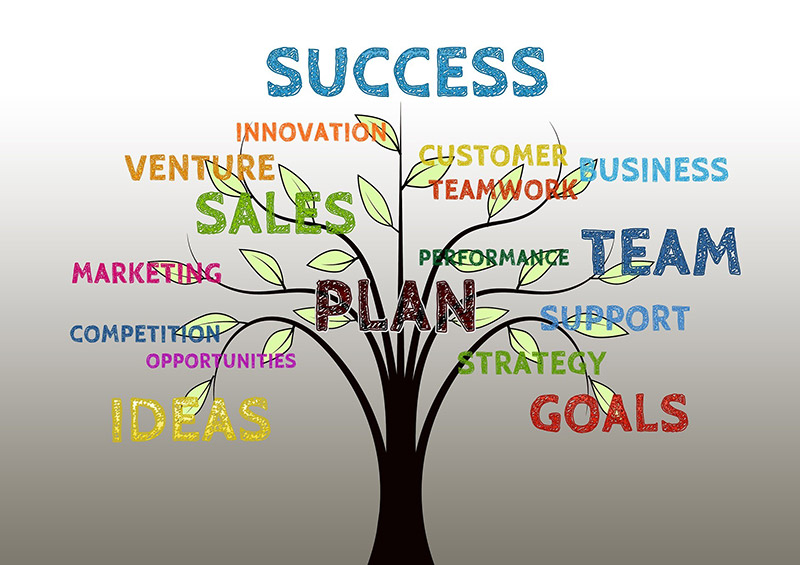
“Thinking strategically” is a sought after attribute in CEO and senior executive selection. Even mid-level professionals who are viewed as strategic thinkers are in big demand and command a premium.
If it’s generally accepted that being able to think strategically is an important skill for success, why does research show that only 7% of executives are viewed as strategic?
We think the answer has to do at least in part with how “strategic thinking” is being taught today. Top business schools have their preferred curriculum, as do corporate trainers. Bottom line, millions of dollars per year is spent on training with the hope of developing strategic thinkers. But present day training is surprisingly similar to what took place 2,500 years ago in ancient Greece. Everyone in class listens to the same lecture and studies the same material. In our opinion, this one-size fits all training approach is the fatal flaw.
Today’s behavioral science research has conclusively shown that people have unique, core personality traits.
These traits underlie and drive creative thinking. Think of great artists and writers. While they all have weighty subject matter expertise, each artist is unique. Each exhibits his or her proficiency differently. These artistic differences are because each artist or writer has a unique personality so they bring forth their creativity through that personality. Why should training to think creatively and strategically be any different? It shouldn’t!
Research and best practices reveal that skills training needs to be developed around the innate characteristics of the individual and not modeled on an “ideal.” If it’s true that people perform best when capitalizing on their strengths, it follows that vanilla conventional programs don’t work because they don’t individualize the curriculum to each personality type.
You create the highest abstract and intuitive connections through your dominant personality traits. Creativity springs from the unconscious. Unless the material being taught aligns with and to your individual core strengths, you won’t feel a connection to it. The result…there is no lasting impact or permanent shift in behavior.
The core of our training philosophy is that individual personalities drive how each person adds strategic value. Your personality is your greatest asset. It’s about tapping into what makes you uniquely you!
You don’t need to change who you are or imitate someone else. It’s a waste of time trying to be something or someone you’re not.
Let’s consider two business legends to demonstrate our point. These examples are also discussed in Becoming a Strategic Leader.
Sam Walton is revered for reinventing retail strategy. Sam’s subject matter expertise was merchandising and partner management. But it was his dominant personality trait that created the Walmart magic.
Sam Walton’s number one personality trait was “emotional stability.” When a person’s number one trait is highly evolved and mature, it can lead to greatness. The distinctive behaviors from Sam’s principal trait of “emotional stability” were honesty, composure, subtle humor and congenially. He had a fatherly wisdom and sense of fairness. His promise was that you will be treated with respect and live a better life by virtue of being a customer.
Sam Walton’s strategy was selling trust. It was not his subject matter expertise that created this strategy. Rather, it was the activation and evolved maturity of his number one personality trait emotional stability that guided Walmart to remarkable success.
Sergey Brin, co-founder of Google, has a mythological story. His parents left Russia because being Jewish inhibited his mother and father’s academic freedom. At an early age he witnessed prejudice against his parents; this irrevocably influenced his thinking. Brin’s core competency and expertise is mathematics. In business, he is a philosophical visionary.
Sergey Brin’s number one personality trait is “open-mind.” His individual expression of the open-minded trait is equality. This personality trait drove Google’s strategic vision. Google evens out the playing field by providing universal access to knowledge. Google’s mission is to make data accessible for everyone in a useful way. Again we observe that it was Brin’s number one personality trait open-mindedness that was the foundation for Google’s strategy of equality of knowledge. If he had a different personality structure, Google’s culture and business model would have been very different.
On the surface, it seems that Sam Walton and Sergey Brin have little in common. Upon closer analysis, it is clear that the corporate strategy for both of their mega-companies was driven by each leader’s dominant personality trait. Our point is that this is when the magic can happen for you. When you tap into your core strength you add the ultimate strategic value.
So how do you become a more strategic thinker?
First, know your personality driven strength. This isn’t your subject matter expertise. Your strength is genetically embedded and was observed at an early age. It’s your core personality trait’s behavioral expression.
Ask yourself three questions and connect the dots between them.
1) What were you good at as a child?
2) What skill came easily and naturally to you?
3) What activity do you enjoy so much that you’d do it for free?
If you thoughtfully answer these questions you will better understand who you are and how you naturally think strategically.
The fact that only 7% of executives are viewed as strategic demonstrates how most education and training in this space has completely missed the mark. The good news for you is that TLT Coaching has the opposite approach to professional development.
Our goal is to take you on a journey of self-discovery. Through this process you’ll build confidence in your own unique personality and better understand how you can use your strengths strategically.