
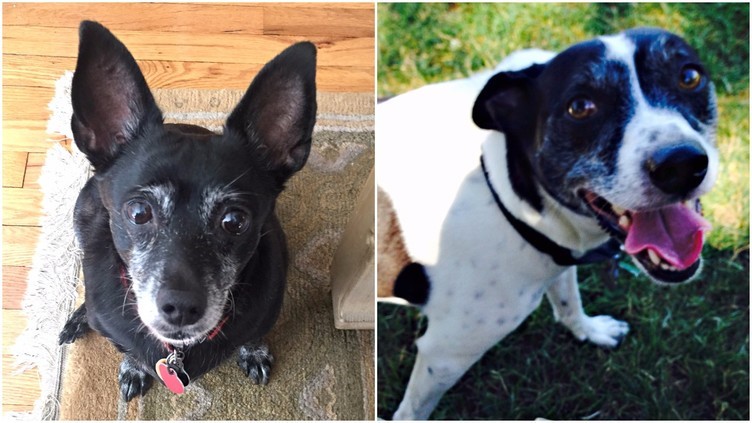
Dogs like humans have personality traits. Both species demonstrate innate behavior that can be trained into practical skills. Watch the interaction at any dog park; you’ll notice personality differences. Some dogs are natural hunters, herders, workers or companions. Some are dominant and extroverted while others are passive and introverted. This behavior isn’t learned – it’s a reflection of who they are.
So, what does this have to do with leadership? Actually, quite a lot!
We have two dogs. “Roo” is a chihuahua dachshund, terrier mix and a Hurricane Katrina rescue. She is highly conscientious and her least dominant trait is extroversion. She doesn’t have a high need for people and doesn’t like most dogs. If taken to the local dog park she is clearly miserable and hates being there. Her strength is her intelligence and protective nature. She makes for an excellent watchdog, barking loudly so that everyone in the neighborhood knows when she’s patrolling the backyard. On her last performance appraisal she scored lowest on being a team player and getting along with others. Her highest score was in guarding the house and terrorizing the mailman.
Our second dog, “Gary” was picked up on the side of the road in a snowstorm. He is a large quite handsome rat terrier, whose dominant personality trait is his agreeableness. He is a born lover whose greatest delight is full body contact with humans. His innate skill is showing remarkable speed and agility in chasing squirrels, rabbits and the occasional possum. His weakness is his lack of bravery and assertiveness. On his last performance appraisal he scored lowest on leadership aptitude. His highest score was in interpersonal relations and being socially bold. He is at his best when he uses his strengths to make everyone, even strangers, feel special.
When we write about leadership and personality our consistent theme is to identify and understand your personality strengths; what you are naturally good at.
You will be most successful if you focus your career around these personality strengths. This is also true for your people. One of your most important functions as a leader is to be sure your people are in the right role based on their strengths.
It’s a fool’s errand to spend a lot of time and effort trying to change people by attempting to turn weaknesses into strengths.
The same principal also applies to Roo and Gary. We could spend many hours trying to train Roo to become more extroverted and social but it wouldn’t work so why would we? We could send Gary to assertiveness training to improve his leadership skills but that wouldn’t work either. He’s fundamentally a follower not a leader.
As owners and pack leaders, we understand and appreciate each dog’s personality strengths. We place them both in situations where they can be successful. Roo stays home and guards the house. She is fantastic at it. In fact, she was recently promoted to SVP of Homeland Security. Gary is our team player and greeter who excels at giving small children a wonderful first dog experience. And, our back yard is virtually squirrel free due to his natural hunting ability. In recognition of his accomplishments, he was recently promoted and is now our Chief People Officer.
We are also happy to report that both dogs exhibit optimal mental and physical health and scored incredibly high on overall life satisfaction. Their careers and lives as dogs are stellar because we encourage them to use their personality strengths.
So how does the example of our canines provide a leadership lesson?
The Strategic Transacting Model is described in Chapter 11 of Becoming a Strategic Leader. This model shows how each personality trait is going to be optimized when directing the initiatives of a particular phase of the transaction cycle. The best leaders understand this and recognize that each individual has core personality strengths whose innate qualities can flourish in the right environment. It’s about placing people where they can best leverage strengths and minimize the negative impact of weaknesses on performance.
We all only want what any dog wants…to be placed in an environment where we can be successful and to be acknowledged for the effort.
Business is always seeking mature leaders who bring out the very best in their people. When this occurs, employees will respond by being loyal and invested in your success and the success of the team. It becomes a win-win, a beautiful reciprocity just like we have in our pack.